Featured

Coronavirus Impact on the Environment

The coronavirus has completely flipped the world upside down unraveling issues that generations to come will face. It has brought terror, hardship, economic downfall, and much more at the global level. While the only thing you are probably reading, hearing, and watching about lately is the coronavirus, I wanted to investigate it from a different standpoint. As billions worldwide are quarantined, the Earth is finally getting a break; pollution has dramatically decreased. 

The coronavirus pandemic has basically shut down the world– cars, buses, trains, and planes are parked, and industry activity is shut down. Blue skies and clear waters emerge as humanity is halted. Places where pollution has dominated are catching a period of relief. From Venice to Beijing, Los Angeles to Bangalore, pollution is decreasing. Beijing, the capital of China, is known for dangerously high levels of toxic pollution that overwhelms the city, has- for the first time in a while- seen clear skies. The lung-choking levels of air pollution has caused nearly 1 million premature deaths each year. As factories in the city have shut down production, this pollution reduction has provided a great unexpected relief. 

Photos show how deserted US roads, tourist spots have become amid ...
The empty streets of New York City

However, experts warn the public to not assume this will fix any problems. The reduction of pollution must come from a source that is maintained during normal societal activity. Environmental experts also expect high pollution levels to return when society does. They also suggest this spike will return faster than we might expect. With billions anxious to return to their normal routines, pollution levels will unfortunately return.    
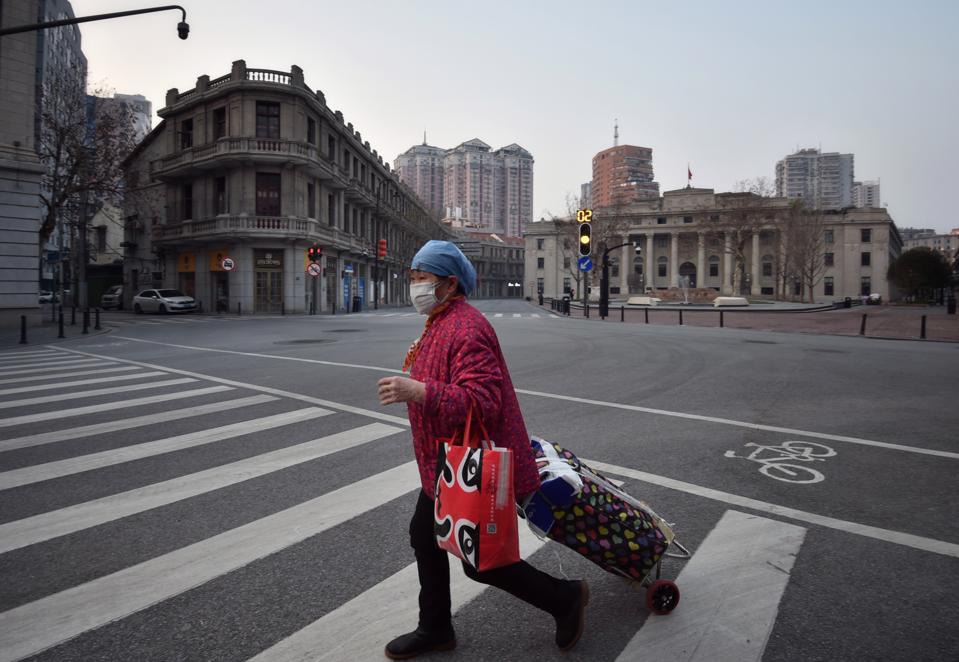
Study: Coronavirus Lockdown Likely Saved 77,000 Lives In China ...

As pollution decreases, data is showing a specific decline in nitrogen dioxide levels. Nitrogen dioxide is responsible for causing respiratory problems and worsening existing respiratory illnesses like asthma. It is abundant in major cities as it is a byproduct of burning fossil fuels; it comes from car engines, power plants, and other industrial processes. The European Space Agency reports satellite images showing reduced nitrogen dioxide levels. Several major cities including Paris, Madrid, and Rome are showing great decline as they are in lockdown and travel restrictions are in place.  As many American states have now entered lockdown, similar effects are being seen. The traffic-congested cities like Los Angeles and New York are showing a great decline in nitrogen dioxide levels. 

In addition to nitrogen dioxide, the world’s largest emitter of greenhouse gases, carbon dioxide, is greatly declining. According to an analysis by Carbon Brief, in China alone, levels have decreased by a quarter in mid-February. 
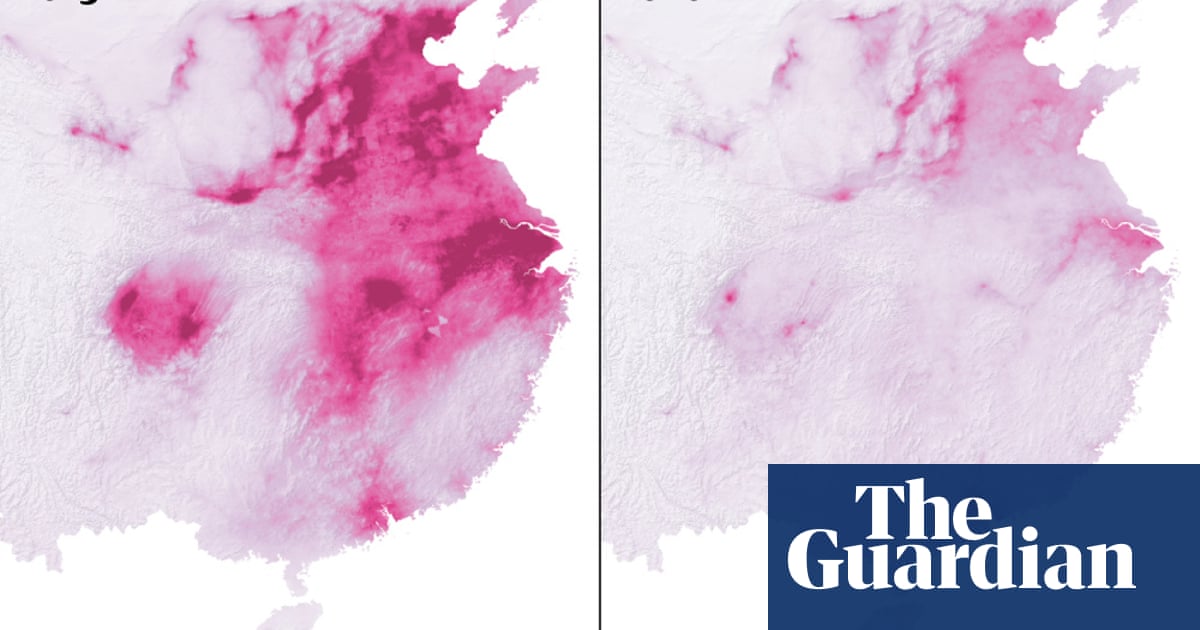
Coronavirus pandemic leading to huge drop in air pollution ...

One of the largest drops in pollution levels was seen in Wuhan, which is located in the center of China. Wuhan contains over 11 million people, serving a large transportation center, a large number of industries responsible for car parts and other materials sold globally. Wuhan was put into strict lockdown in late January and saw a dramatic shift in air quality. According to experts of Nasa, all across eastern and central china, nitrogen dioxide levels have been 10-30% below normal. 

NASA images: China's air pollution decreased amid coronavirus measures

Similar effects are also being seen in Italy. The changes in northern Italy have been striking. Much of the factories’ smoke gets trapped against the Alps located at the end of Po Valley. This has turned into one of the most polluted places. When lockdown was set in place in early March, Milan and other parts of northern Italy gained a great period of relief. Nitrogen dioxide levels fell by around 40%. This trend doesn’t stop at China and Italy- but continues as more countries enter lockdown. 
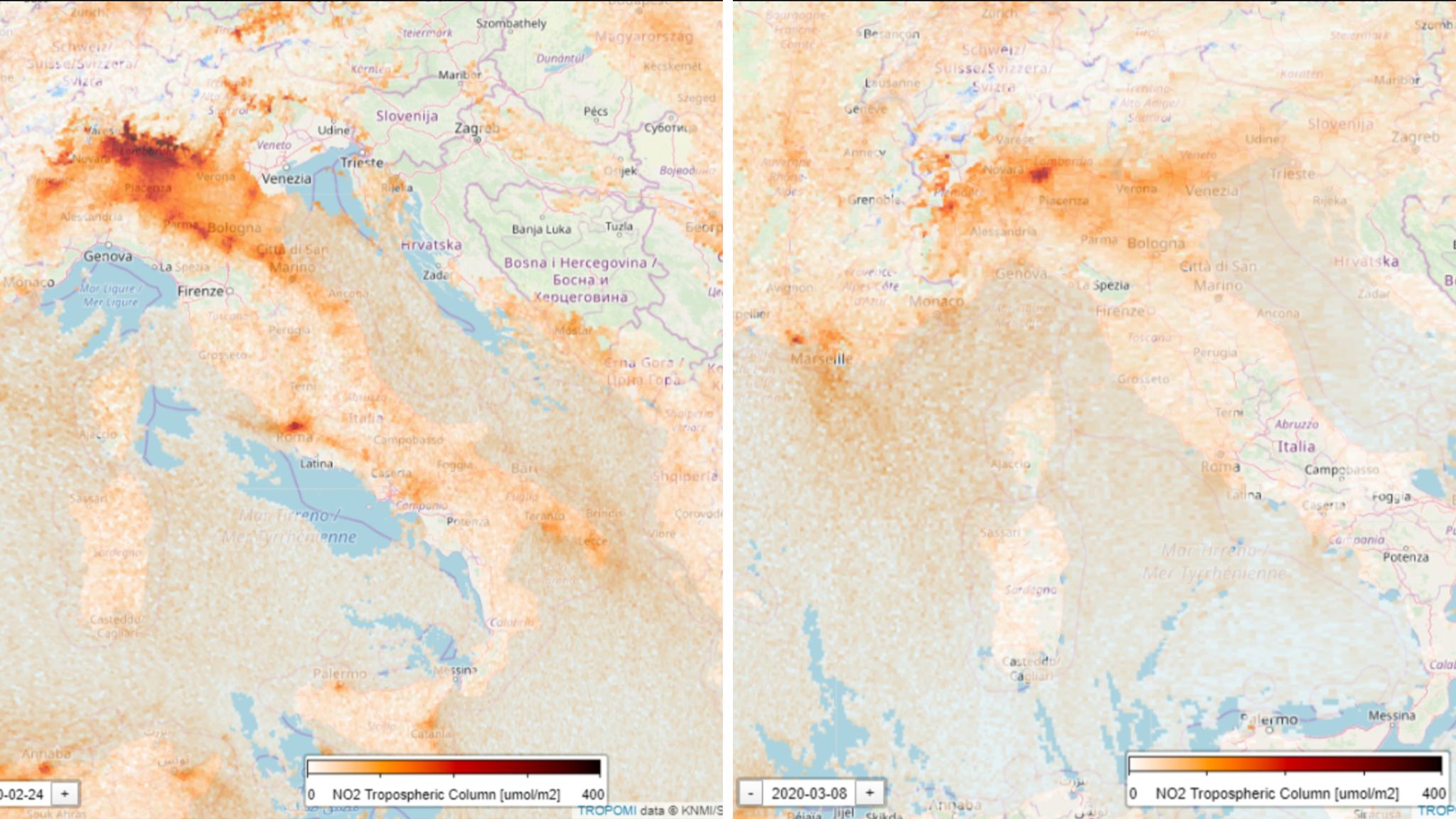
Coronavirus: Satellite shows fall in pollution over northern Italy ...

The decline in emissions is so important for the development of the planet throughout nature and for humanity. Its ability to aggravate respiratory diseases contributes to millions of deaths across the globe. In addition, this clear air may help those with COVID-19. The clearer air may bring some relief– making it easier for them to breathe. However, experts say that the years of inhaling polluted air has already done the damage and has probably made people more succesptible to coronavirus.  
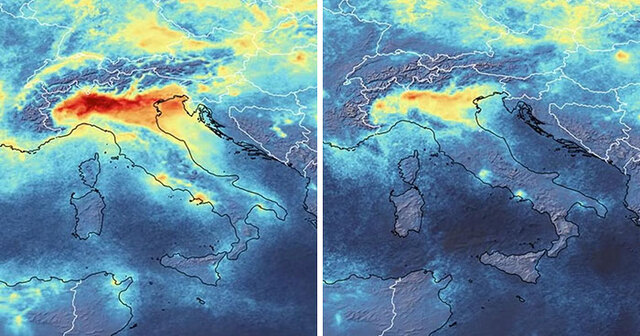
Satellite Photos Show A Dramatic Decrease In Pollution Above Italy ...

With all of this said, the carbon emissions will not stay down without dramatic changes. They are likely to bounce back just as fast as they have dropped– and have already begun so. China is the perfect example of this process. According to Myllyvirta, nitrogen dioxide pollution had returned to normal levels by the end of March. This pattern will likely be seen across the globe. 

Clearly, the decrease in pollution is not a silver lining. We can only hope that people use this period as an example of what the environment is supposed to look like and that we can change that. We see how badly our actions affect the environment and that policies and regulation need to be set in place in order to reduce the pollution during normal societal activity.

Are Biomass Briquettes Sufficient to Reduce Air Pollution from ...

https://www.theguardian.com/environment/2020/mar/23/coronavirus-pandemic-leading-to-huge-drop-in-air-pollution

https://time.com/5812741/air-pollution-coronavirus/

Meat Lovers and the Environment

This week I will be discussing the meat industry and its negative effects on the environment.  The main problem is that our modern culture has become so accustomed to eating meat, and no one understands or is aware about the negative effects it has on the environment. This culture is especially perpetuated in Americans’ everyday lives.  

Data from the International Livestock Research Institutes in Kenya shows that 285 million tons of meat are produced each year, and if that were to be distributed evenly throughout the population that would be about 80 pounds a person.  However, that is obviously not the case with Americans consuming on average 270 pounds a year as compared to Bangladeshis eating 4 pounds. This overconsumption of meat came with three environmental issues: feed sourcing, manure processing, and climate change.  In order to feed livestock and raise them to be healthy, vast quantities of feed is essential. The demand for feed is met by plowing millions of acres of monoculture crop fields solely dedicated to feeding livestock. Deforestation is a major environmental issue that carries with it habit loss and lack of CO2 absorption that is normally done by the vegetation that is removed.  Manure is typically stored in massive pools that are highly susceptible to flooding or leakage. When this occurs, it releases harmful substances such as antibiotics, bacteria, pesticides, and heavy metals into the surrounding environment that eventually ends u

Americans' meat consumption set to hit a record in 2018 | The ...

p in our water supply.

These issues do not stop here. Meat production requires the use of many fossil fuels. Data shows that one calorie of meat product requires around 10 times the input of fossil fuel energy than one calorie of plant protein. This number varies depending on the type of meat, and what the livestock is fed with. Other estimates show that grain-fed beef requires almost 35 fossil fuel calories for each calorie produced. 

Why eat Vegetarian - Environmental Damage - Vegetarian for Meatlovers

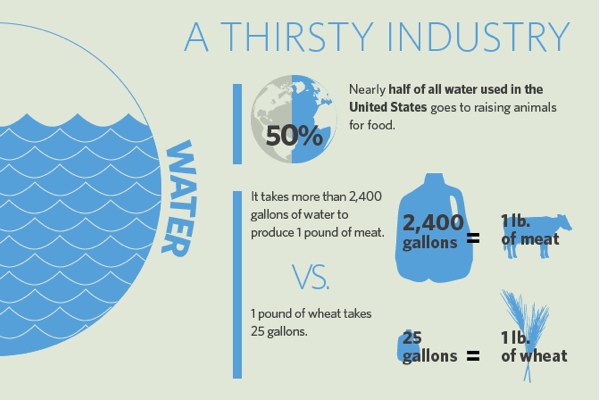
In addition to these issues, water is a huge issue in raising livestock. Nearly half of the water used across the U.S. goes toward raising livestock. Growing crops and other produce certainly uses water, but not even close to how much meat requires. It takes around 2,400 gallons of water to produce one pound of meat while it only takes 26 gallons of water to produce 1 pound of wheat. Not showering for 6 months water use is equivalent to not eating 1 pound of meat. Imagine if a restaurant not only showed the calorie content of their meals, but showed the amount of water used, CO2 emitted, and overall impact that meal had. I bet that would certainly change people’s decisions. These facts are very alarming, yet many people brush them off without a second thought. 

Infographic: Veganism and The Environment - One Green PlanetOne ...

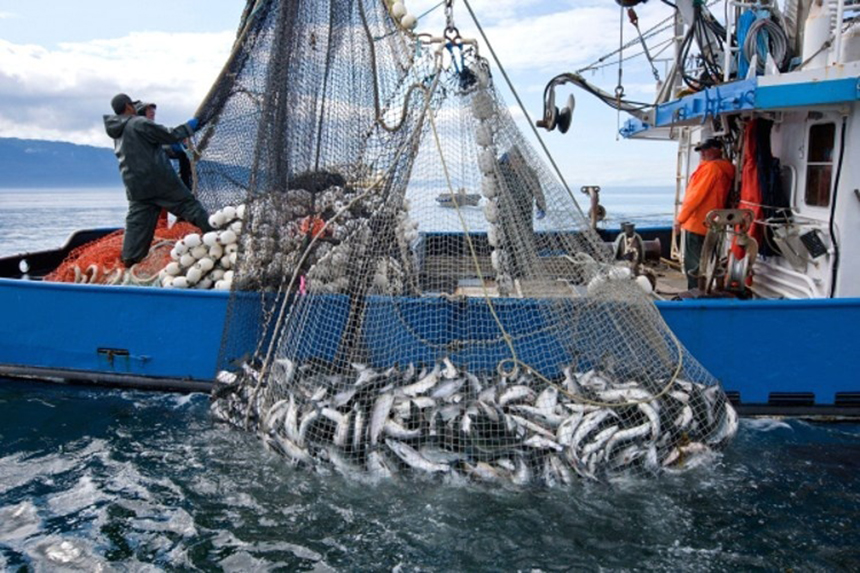
Then there is also seafood to take into consideration. Without even pulling out the facts, it is easy to picture large boats going through the waters all the time, polluting the once clean blue waters. The oceans around the world have been increasingly polluted and the seafood industry plays a huge role in this issue. 

Population-by-Population Fisheries Management Not Working — ecoRI News

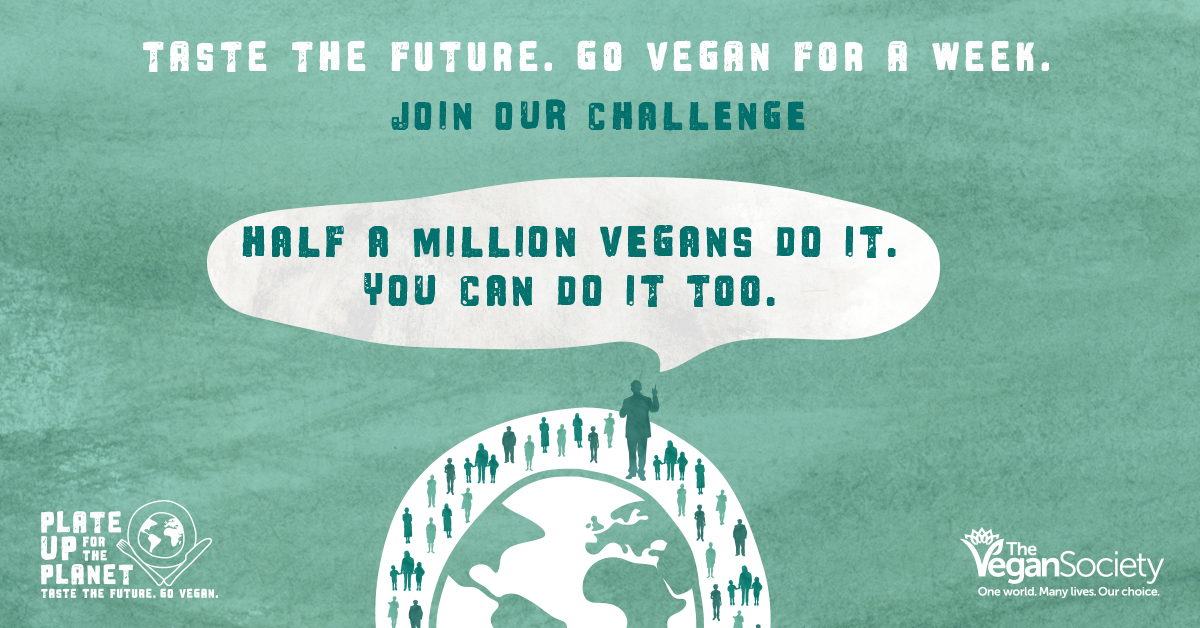
Veganism has become a very popular diet in the United States with environmental issues being one of the main reasons. An average day of food for a meat-eater requires over 4,000 gallons, whereas only 300 gallons are required to produce food for a typical vegan. 

So the question is, can people live without meat to improve the environment, or is the meal too important to them? The issue does not require the entire world to become a vegan right now, but it is first important to educate them on the topic. Imagine if people changed their diets and how much this would change these statistics and improve the environment.  

Our vegan challenge saves enough carbon dioxide to fly to the moon ...

https://www.cleanwateraction.org/features/meat-industry-%E2%80%93-environmental-issues-solutions

https://insideclimatenews.org/news/17102019/climate-change-meat-beef-dairy-methane-emissions-california

Environmental Racism

During this blog week is….. Earth Day! Every Earth Day I scroll on Instagram to find many posts of people’s (mainly girls) pictures to capture the amazing places they have travelled the world. It sometimes makes me mad when friends of mine post pictures of their adventures with a caption about helping Earth when they just took a 30 minute shower and drove around for an hour cause they were bored…. Oops sorry slight rant… However, I do especially love Earth Day because it is a huge reminder about how beautiful our Earth is, and how fragile it is too. It serves as a reminder to treat it right and practice good sustainability. Thanks to the coronavirus our Earth is the best it has been in a while. If you haven’t read my last post, go check it out!

Earth Day 2020: Celebrate the 50th Anniversary at Home | The Old ...

This week I would like to discuss environmental racism. Environmental racism is the term used to describe the environmental injustice seen in practice and in policy among disadvantaged communities. It refers to the low socioeconomic groups burdened with a great number of hazards including, but not limited to, toxic waste facilities, garbage dumps, sewage plants, and other sources of environmental pollution and foul odors. These facilities decrease the quality of life this community endures along with a greater risk of developing health problems as a result of the higher exposure to waste and pollution. Many neighborhoods come uncomfortably close to toxic materials and waste facilities. This process is quietly practiced through bills and laws which allow industries to build these facilities in lower socioeconomic areas. 

Environmental Racism Causes People of Color to Face Compound Exposures

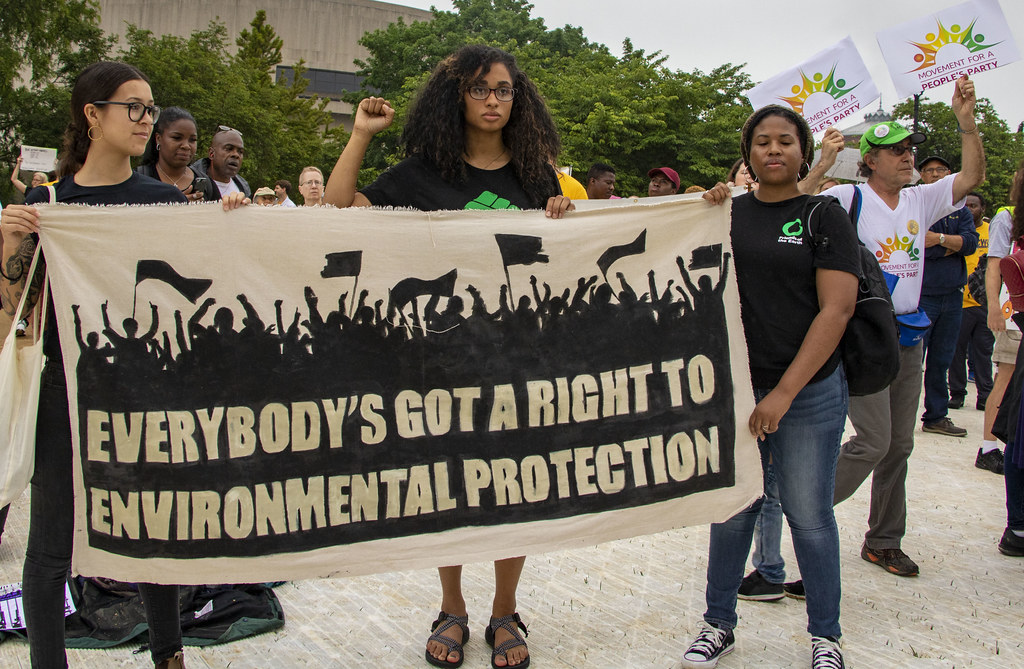
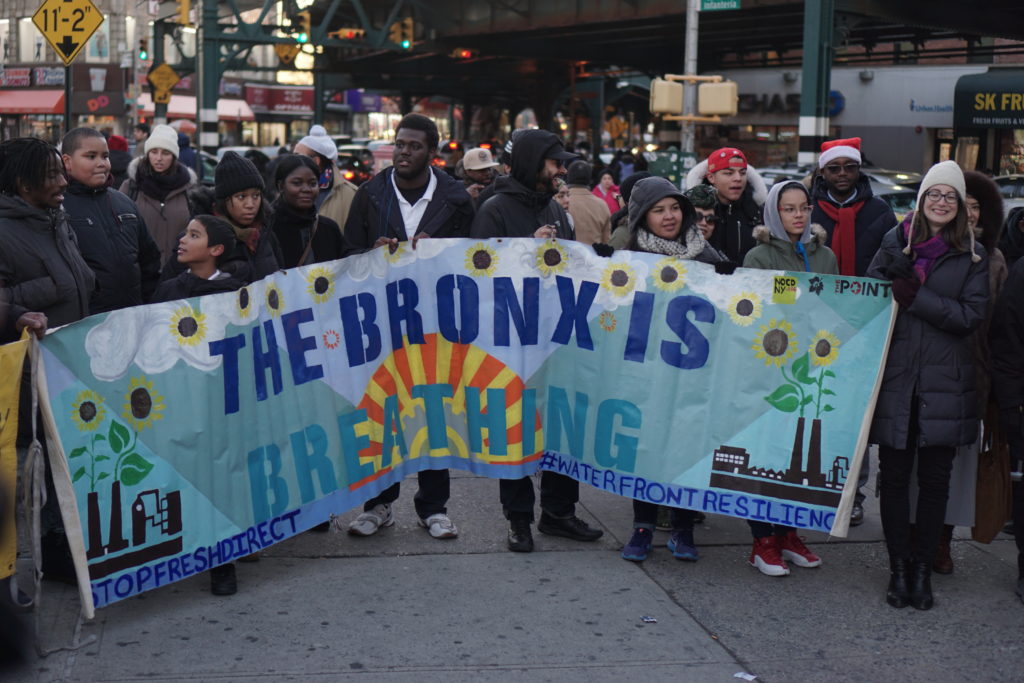
The Bronx in New York is the perfect example of environmental racism. It had one of the lowest ratios of parks to people in the city. The city also faces a large number of dangerous facilities: 40% of the city’s waste, 100% of the Bronx’s waste, Sewage Treatment Plant, Sewage Pelletizing Plant, 4 Electrical Power Plants, as well as other industries that bring in over 60,000 diesel truck trips each week. These statistics, along with many others, are not just something the community has to “deal” with, but it completely alters their way of life. These hostile conditions keep the members of the community inside their house away from the toxic air in their neighborhoods. The community would continue worsening as policy allowed it to. Members fought for change and have started projects that have pulled the city up and made it a liveable, enjoyable city. 

New York City Environmental Justice Alliance - Global Alliance for ...

Race and class unfortunately indicate the differences in communities; a community where one might find an abundant number of parks and trees, whereas others face an abundance of waste facilities. The statistics on environmental injustice are extremely shocking:

  • Black people are twice as likely to live in an area where air pollution poses a greater risk to one’s health. 
  • In a study led by Robert Bullard, it was found that African American children are five times more likely to have lead poisoning than a Caucasian kid would. 
  • The Commission for Racial Justice performed studies that found about 50 percent of American Indians live in communities with unregulated hazardous waste sites. 
  • Another example takes a look at coal power plants; of the people that live within 3 miles of a coal power plant, 39% of them are people of color. 

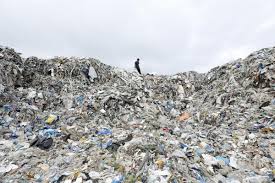
Lower class cities of the country are not the only communities affected. The United States dumps waste in developing countries. For example, 80% of the countries e-waste (electrical waste) is exported to Asia, while only 15-20% of it is recycled. It is estimated that 20-50 million tons of e-waste is generated each year, and this number is only growing. Malaysia is another country taking in other countries’ waste. Malaysia has actually become the world’s largest importer of plastic scrap. The country receives hundreds of millions of tons of waste from the United States, Europe, Japan, and more. Other countries including Thailand and Vietnam are proceeding with similar practices.

Media Briefing: Canada's Plastic Waste Export Trends Following ...
Dump Site in Malaysia


Landfills site in Malaysia | Download Scientific Diagram
Landfill Sites in Malaysia

Health issues are a major concern when looking at environmental racism. Asthma, lead poisoning, and lung cancer, are a few issues that have increased in these communities. The highest rates of asthma are seen in low socioeconomic communities and communities of color. The many facilities I have previously listed emit dangerous particulate air pollution, like soot. Inhaling this matter causes these devastating impacts on health. Greater chances of obesity and diabetes are found in poorer communities, where members stay inside and are not lucky enough to indulge in parks and nice neighborhood settings. 

Why you should care: air quality and health | Minnesota Pollution ...

When complaints are filed to the Environmental Protection Agency, many are rejected. The communities that are suffering receive the least amount of regulation and assistance. The problems have been taken within their communities where members have started initiatives themselves. If you enjoy this topic and want to learn more about the Bronx and how they are turning their community around, please watch this video:  

Environmental racism is a topic that is pushed under the rug. I don’t believe I have ever been taught about this subject in school, and I believe it is something that should definitely gain more attention. In a very developed country like the United States, it is extremely saddening to read this information and continually see very little change. Imposing health risks on specific communities is something that never should have occurred, let alone during this era. We have the resources and capability to change these issues and practice better policies in the future. 

Urban Planning 269: Special Topics in Environmental Analysis and ...

https://www.sierraclub.org/press-releases/2019/08/new-study-shows-environmental-racism-and-economic-injustice-health-burdens

Intro :)

I have long been passionate about sustainability and positive environmental efforts. In the past years the effects of our carbon footprint has gained the spotlight. It has been an issue, growing for many years, but is only suddenly earning the priority it deserves. With this said, not much has been changed to improve the many issues at hand. The government has not made large efforts in law writing, providing money, or through other attempts. Business regulations fail to improve, schools have barely improved, and individuals do not feel as though their actions matter.

I have become a huge environmental advocate and take it upon myself to ensure I am always recycling, always choosing the waste free option, using green-to-gos, taking quick, showers, turning off lights, and whatever else I can do. I hope to make the smallest foot-print I can. 

Even though I am just one person, I can see my actions making a difference. I usually drink coffee everyday, and this semester I have only used four plastic cups (when I forgot my reusable cup). It is the fifth week of school, instead of the accumulation of 35 cups that would have ended up in the recycling and potentially the trash, I have eliminated 31 of them. 

Yes, I am that person that will yell at you if you don’t use a reusable cup or use styrofoam instead of green-to-gos. My friends hear about it everyday and have developed better habits from my constant nagging. I also think that when people see me using reusable cups for water and coffee, and seeing the green-to-go when I carry it, they will think about it and hopefully decide to do the same thing the next time they eat. Campus commons and stores offer discounts when reusable products are used. Starbucks offers a 25 cent discount each time, and this isn’t just with their cup. You can bring any reusable cup you own and they will fill it and give you a discount. 

I have asked strangers and friends why they do not use reusable products and why they choose not to use the green-to-go. Many answer that they feel they will not make an impact. Many also state that it’s inconvenient and challenging. I sometimes struggle to remember to clean my cups and bring back my green-to-go but I really do not feel like it is a hard thing to do. I find it relaxing to clean and it may take three minutes out of my day. 

People always ask me why I care so much about the environment and I can never find a straight answer. I ask them, why wouldn’t I? I did not grow up in a household that recycled nor did they teach me about the issues of the environment. I cannot figure out how, but I developed this passion on my own.

Design a site like this with WordPress.com
Get started